
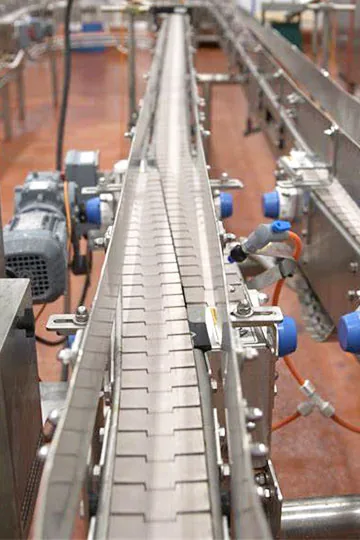
Direct answer: Material handling bearings should be selected around conveyor position, shaft and housing fit, dust or washdown exposure, load, speed and maintenance access. Nexans Bearing supplies conveyor, pillow block, insert and roller bearing references for MRO and distributor programs.
Material handling rewards reliability more than short-term price.
Conveyors and handling systems run through warehouses, ports, mines, food production, parcel hubs and manufacturing plants. A small bearing failure can stop a line, create manual handling work and damage the belt or product. The replacement decision therefore has to consider contamination, load, alignment and maintenance access.
Nexans Bearing supplies conveyor, pillow block, insert, sealed ball, spherical roller and tapered roller bearings for material-handling distributors and maintenance teams.
Common bearing positions.
Conveyor idlers and rollers
Idler bearings are usually compact and sealed, with low torque and reliable grease retention. The operating environment determines the seal and clearance choice. Dust, washdown water and high temperature can each require a different approach.
Pulleys and drive drums
Pulley bearings carry belt tension and radial load, and may need a spherical roller or tapered roller design depending on the drum and drive arrangement. Housing fit, shaft fit and lubrication route should be checked before replacement.
Pillow block and insert units
Pillow block and flanged units simplify shaft support and replacement in conveyor systems. Buyers should confirm shaft diameter, housing type, insert locking method, seal type and load direction. A compatible-looking unit with a different locking collar may not fit the maintenance procedure.
Production-line rollers and guides
Small sealed bearings support rollers, guides, tensioners and transfer mechanisms. In food or washdown environments, the bearing and lubricant must suit the cleaning regime and local hygiene requirements.
Procurement checklist for conveyor bearings.
- Original bearing or housing reference.
- Shaft diameter, housing dimensions and locking method.
- Belt speed, load and operating hours.
- Dust, water, washdown and temperature conditions.
- Required seal, clearance and lubrication.
- Replacement interval and annual consumption.
Why bearings fail in handling equipment.
Misalignment, over-tensioned belts, damaged seals, over-greasing, under-greasing and housing wear are common causes. A bearing replacement should include a check of the shaft and housing. If the housing bore is worn or the shaft is damaged, a new bearing may fail quickly even when the part itself is correct.
Supply and consolidation.
Material-handling distributors often carry a mix of small sealed bearings, pillow block units and larger roller bearings. We can review mixed references, packaging and delivery schedules as one export program, helping reduce the number of purchase orders and shipments.
Start with the failure report.
Send photos of the failed bearing, housing, shaft and surrounding equipment, together with dimensions and operating details. If the cause is unclear, the images may help identify sealing, alignment or installation issues before the next order is placed.
Frequently asked questions
Which bearing type is used for conveyor idlers?
Conveyor idlers commonly use sealed ball bearings or specialized idler bearing arrangements. The correct choice depends on roller design, load, belt speed, dust and water exposure.
Can you supply pillow block bearing units?
Pillow block and insert bearing units can be reviewed by shaft diameter, housing type, locking method and seal requirement. Send the reference and application details for confirmation.
How do I reduce conveyor bearing failures?
Check alignment, belt tension, contamination, lubrication and housing condition. A replacement bearing should be matched to the actual cause of failure rather than selected by dimensions alone.